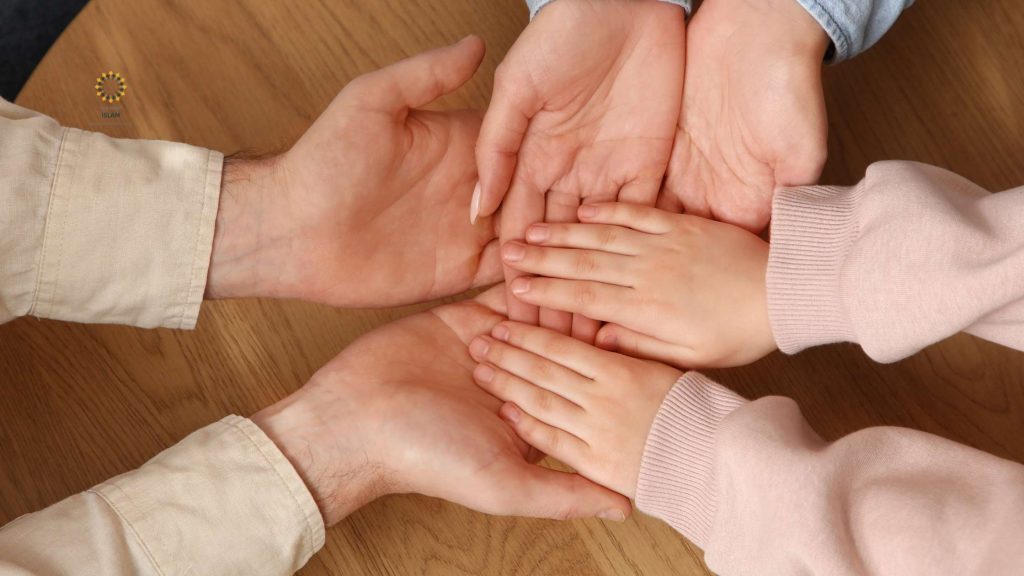
Every child deserves affection, stability, and the sincere feeling of being wanted. Yet some Muslim couples considering adoption often hear a blunt answer: “Adoption is forbidden in Islam.” But this incomplete statement can make a compassionate faith appear indifferent to vulnerable children.
In fact, Islam allows and strongly encourages caring for an orphan or abandoned child. What it does not allow is erasing the child’s known biological identity or pretending that adoption creates a blood relationship. The primary difference concerns lineage and legal rights, not love. Islamic guidance allows a real home and a lasting commitment, not merely temporary charity.
Islam Encourages Families to Open Their Homes
The Holy Qur’an does not tell Muslims to keep orphans at a distance. When people asked the Prophet (PBUH) about them, Allah replied: “Improving their condition is best. And if you live together with them, they are your brothers” (Qur’an 2:220).
This verse permits shared family life while placing the child’s welfare first. A Muslim family may provide a home, education, protection, and lasting emotional support. This is sometimes called kafala: guardianship or sponsorship without creating a false bloodline.
Moreover, the Prophet (PBUH) said that he and the person who cares for an orphan would be close together in Paradise, placing his index and middle fingers beside each other (Sahih al-Bukhari 6005).
Ultimately, Islam asks that such care be built upon compassion and truth.
What the Story of Zayd Actually Changed
Zayd ibn Harithah (R.A) – a companion of the Holy Prophet (PBUH) lived in the Prophet’s household and was loved deeply. After being freed, he chose to remain there. People eventually called him Zayd ibn Muhammad, as though adoption had replaced his biological lineage.
However, the Holy Qur’an corrected this practice. Muslims were instructed to identify adopted children through their biological fathers when those fathers were known. Zayd was again called Zayd ibn Harithah.
The ruling did not weaken their bond, but corrected his public identity. Islam changed Zayd’s attribution, not his value.
Why a Child’s Original Identity Matters
Knowing one’s origins protects medical history, inheritance rights, and biological relationships. It can also prevent marriage between close blood relatives as per the Islamic commandments. Islam therefore prohibits deliberately concealing or replacing a child’s lineage.
If the biological father is known, the child should remain connected to that identity. If the father is unknown, nobody is required to invent a name or attach shame to the child. In this context, the Holy Qur’an calls such children fellow believers and trusted companions rather than treating their unknown parentage as a fault.
However, modern legal systems handle surnames differently. The central principle is not to present adoptive parents deliberately as biological parents. Local guidance can resolve difficult documentation requirements without abandoning the child’s care.
Can an Adopted Child Inherit?
An adopted child does not automatically receive the fixed inheritance share of a biological child. However, adoptive parents are not required to leave the child financially insecure. Fixed shares remain connected to marriage and blood relationships, while gifts and bequests provide another lawful route for generosity.
They may provide through several lawful methods as follows:
- Giving money or property during their lifetime
- Establishing savings for education and future needs
- Making a bequest from up to one-third of the estate
The Prophet (PBUH) permitted a bequest of one-third, while noting that less could be better (Sahih al-Bukhari 2742). Planning can protect an adopted child without altering Qur’anic inheritance.
Any property already belonging to the child must also be guarded carefully. The Holy Qur’an 4:2 warns guardians not to consume or exchange an orphan’s wealth dishonestly.
Is an Adopted Child a Mahram?
A mahram is a close relative whom a person can never marry. Adoption by itself does not create this relationship because it does not change blood ties.
During childhood, the adopted child lives naturally within the home. Near maturity, ordinary privacy and modesty rules may apply with opposite-sex family members. These boundaries should be introduced gently, never as a message that the child no longer belongs.
Moreover, breastfeeding during infancy can establish a permanent nursing relationship with marriage boundaries similar to blood relations. Conditions differ among recognised schools, so families considering infant adoption should plan early.
These rules address privacy and marriage. They do not prevent affection, parental responsibility, or a lifelong family bond.
Love Does Not Require a False Bloodline
So, is adoption allowed in Islam? Yes—when adoption means raising, protecting and loving a child while respecting the child’s identity and Islamic legal rights. Islam prohibits fabricated lineage, not family compassion.
Welcoming a vulnerable child may require thoughtful planning, but the reward is far greater than the difficulty. A home built upon mercy and truth can transform a child’s life and bring the caregivers close to the Prophet (PBUH) in Paradise.