Eid al-Adha is often called the “Festival of Sacrifice”, but its real meaning is much deeper than the sacrifice of an animal. It is a story of faith, love, trust, mercy, and sharing.
This Eid is connected to Prophet Ibrahim (Abraham), his son Ismail, the journey of Hajj, and true devotion to Allah. It makes a person more humble, generous, and compassionate.
The Story of Prophet Ibrahim and Ismail
Prophet Ibrahim was one of the greatest and most honored prophets of Allah. He spent his entire life calling people to worship one God, reject idols, and live with truth and courage. During his life, he faced opposition, loneliness, and many difficult tests, but his unwavering trust in Allah never broke.
For a long time, Prophet Ibrahim had no child. He prayed to Allah for righteous offspring for years. Allah blessed him with a son, Ismail. This child was deeply loved because he came after years of waiting. In fact, he was a gift, a comfort, and a sign of Allah’s mercy.
Then one day came one of the greatest tests in human history. Prophet Ibrahim saw in a dream that he was sacrificing his son. In Islam, the dreams of prophets are not ordinary ones; they carry divine meaning. This was a test of surrender: would Ibrahim place Allah’s command above even the dearest love of his heart?
So, Prophet Ibrahim did not hide the matter from Ismail. He spoke to him with honesty and love. The Holy Qur’an mentions Ismail’s beautiful response:
“O my father, do as you are commanded. You will find me, if Allah wills, among the patient.” (Qur’an 37:102)
This moment shows the greatness of both father and son. Ibrahim was ready to obey Allah, and Ismail was ready to submit with patience. Their faith was not forced. It was conscious, willing, and full of trust.
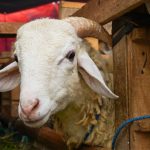
When Ibrahim laid his son down and prepared to fulfil the command, Allah changed the place of Ismail and put a sheep over there. Allah replaced him with a great sacrifice, as mentioned in the Qur’an:
“And We ransomed him with a great sacrifice.” (Qur’an 37:107)
This is the soul of Eid al-Adha. Allah did not want human blood. He wanted to show the world the depth of Ibrahim’s faith and then replace the son with mercy. The story teaches that true sacrifice begins inside the heart: giving up ego, pride, selfishness, greed, and anything that stands between a person and Allah.
Why Is Eid ul-Adha Connected to Hajj?
Eid ul-Adha comes during the days of Hajj, the annual pilgrimage to Makkah, and one of the five pillars of Islam. Hajj is also deeply connected to Prophet Ibrahim and his family. Pilgrims remember his devotion, his building of the Kaaba with Ismail, and the struggle, prayer, and patience of his household.
During Hajj, Muslims from every country, race, language, and social class gather in simple clothing. Kings and workers, rich and poor, stand together before Allah. This unity is one of the most powerful images of Islam. It reminds people that real honour is not in wealth, skin colour, nationality, or status. It is in faith, humility, and good deeds.
In a nutshell, Eid ul-Adha allows Muslims everywhere, even those not performing Hajj, to share in that same spirit of obedience, gratitude, and generosity.
Why Do Muslims Sacrifice Animals?
Muslims perform Qurbani, or sacrifice, to remember Prophet Ibrahim’s devotion and Allah’s mercy. But Islam clearly states that the physical meat and blood are not the main purpose.
In this context, the Qur’an says:
“Neither their meat nor their blood reaches Allah, but what reaches Him is your righteousness.” (Qur’an 22:37)
This verse is really crucial. It means neither Allah needs the animal, nor does He need food, blood, or sacrifice. The purpose is to build taqwa — God-consciousness, sincerity, obedience, and gratitude.
A Muslim who sacrifices an animal should remember: “Allah gave me wealth, food, family, and life. So, I must not be selfish, and I must share what He gave me.”
The Mercy and Meaning Behind Sacrifice
Some people may look at Eid ul-Adha and might perceive it as mass killing. But in reality, sacrifice is not entertainment, cruelty, or a public show. It is a regulated act of worship, and the meat is used for food and charity.
Even if animal slaughtering is done for meat purposes in restaurants on normal days, nobody points a finger at it. The slaughtering of animals on Eid is the same but the intention is to sacrifice them for Almighty Allah.
For Eid sacrifice, the animal should be healthy, treated gently, and not harmed unnecessarily. Islam does not allow people to torture animals, frighten them for fun, starve them, beat them, or slaughter them carelessly. The Prophet Muhammad (Peace Be Upon Him) taught that Allah has prescribed excellence in everything, and when slaughtering, a person should sharpen the blade and spare suffering to the animal. This teaching is found in the credible book of hadith, known as “Sahih Muslim”.
So, a sacrifice without mercy contradicts the spirit of Eid. The act should make the heart softer, not harder.
In a nutshell, when understood properly, Eid ul-Adha is a festival of love and responsibility. It teaches that the closest hearts to Allah are not the hardest ones, but the most sincere, humble, generous, and merciful.