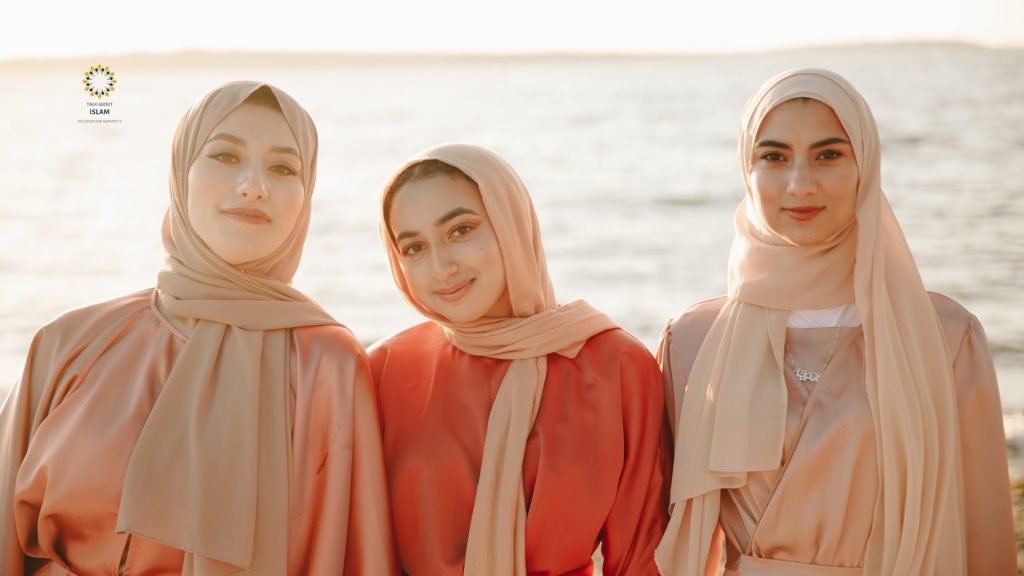
Across numerous media discussions, political debates, and social platforms, Islam is often portrayed as a faith that suppresses women’s voices. Moreover, images of silenced women, restricted expression, and enforced quietness circulate widely. Ultimately, it creates a powerful and emotionally charged narrative. It is crucial to say this clearly that this question does not emerge from nowhere. Many women, particularly in some Muslim societies, have genuinely experienced silencing.
However, it is pertinent to acknowledge that the media has portrayed a completely different view of what Islam says. So, to understand whether Islam itself silences women’s voices, distinguishing between faith, culture, and power is essential.
Separating Faith, Culture, and Power
One of the most common mistakes in discussions about Islam and women is treating Islam as a single, uniform social practice. In reality, what people experience is often a mix of religious language, cultural tradition, and human authority. When power is exercised unfairly, religion is sometimes used as a shield to justify it.
Islam, as a faith, presents moral principles. Culture shapes how societies behave. Power determines who is heard and who is ignored. Confusing these three leads to conclusions that blame faith for failures that are fundamentally human.
Women’s Voices at the Beginning of Islam
From its earliest days, Islam did not expect women to be silent observers. Women asked questions, challenged assumptions, and sought knowledge directly. They spoke in public spaces, engaged in discussions, and corrected misunderstandings.
The Quran itself records women questioning and being answered without dismissal. One passage refers to a woman who spoke openly about injustice in her marriage, and God’s response is clear: “God has heard the words of the woman who argued with you…” (Quran 58:1). Her voice was not silenced, but was acknowledged and preserved.
What “Having a Voice” Actually Means in Islam
In many modern conversations, having a voice is equated with constant visibility or loud expression. Islam approaches this concept differently. A voice, in Islamic ethics, is tied to agency, dignity, and moral responsibility, not volume.
Men and women alike are addressed as morally accountable individuals. Each is expected to think, choose, and speak with integrity. Silence is not presented as a virtue, nor is loudness presented as empowerment. What matters is meaningful, responsible expression.
Modesty Is Not the Same as Muting
Modesty is often misunderstood as enforced invisibility. In Islam, modesty is about character, intention, and respect, not erasing presence. It applies to behavior, speech, and interaction, not to the removal of voice.
Women were never instructed to disappear from society. They were instructed, like men, to engage with dignity. Confusing modesty with silence reflects cultural discomfort with women’s agency, not a religious command.
When Culture Overrides Faith
In some societies, patriarchal norms predate Islam and continue under its name. In such environments, women may be discouraged from speaking, questioning, or participating, while these restrictions are framed as religious.
Islam does not sanctify injustice. The Holy Quran repeatedly emphasizes fairness and moral accountability. “God commands justice and excellence” (Quran 16:90). When women are silenced unjustly, this command is violated, not fulfilled.
Women, Disagreement, and Public Life
Islam does not require women to agree silently or withdraw from public concerns. Women are described as moral agents with the right to advise, question, and disagree respectfully. Responsibility to speak truthfully applies to all believers.
The Prophet Muhammad (peace be upon him) himself listened to women, accepted their counsel, and responded to their concerns. His practice shows that listening is not a concession but a moral obligation.
The Difference Between Loudness and Meaning
Modern discourse often assumes that empowerment must look the same everywhere. Islam offers a broader understanding. Some voices are loud, while others are steady and principled. Both can be powerful.
Islam does not measure worth by visibility but by integrity. A meaningful voice may be firm without being aggressive, present without being performative. This understanding challenges stereotypes that equate silence with oppression and noise with freedom.
What Islam Ultimately Protects
At its core, Islam places immense value on human dignity. Women are not treated as secondary moral beings, nor are they expected to surrender their voices to others. They are addressed directly by God, held responsible for their choices, and recognized for their intellect, insight, and moral agency.
The Quran speaks to believing men and believing women together, repeatedly emphasizing shared responsibility, ethical awareness, and accountability. This pairing is not symbolic, but reflects a moral equality that runs throughout Islamic teaching.
Silencing women, therefore, represents a failure of people, not a command of faith. Islam’s ethical vision calls for voices guided by dignity, wisdom, and justice. These are the voices that speak thoughtfully, question responsibly, and contribute meaningfully to society.
Ultimately, when women are allowed to speak only through permission, fear, or cultural expectation, something essential is lost. Islam does not ask women to disappear. It asks society to listen. In doing so, it affirms that a woman’s voice is not a threat to faith but a reflection of its moral depth.