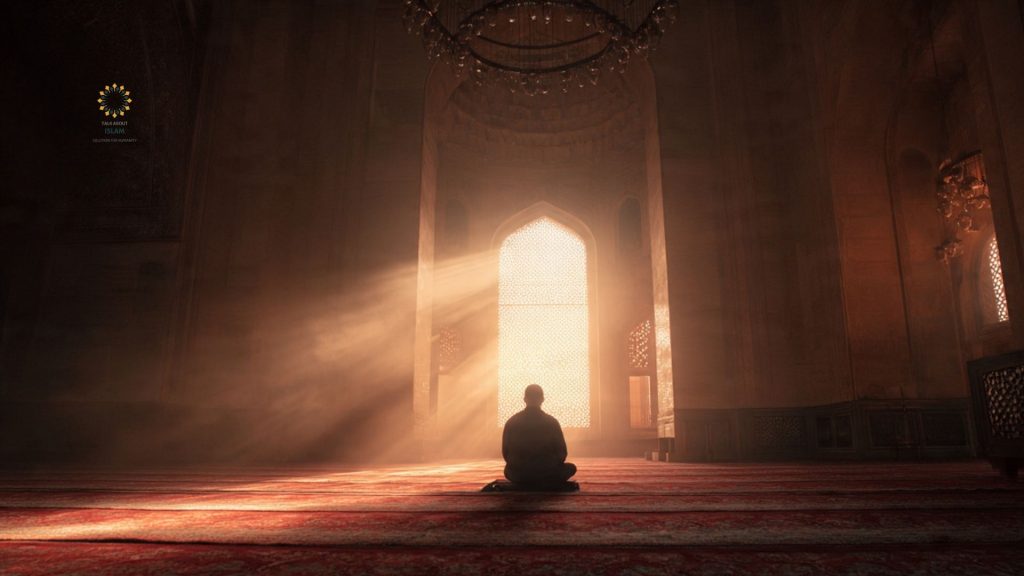
There is a question many people carry quietly in their hearts:
“You don’t know what I’ve done.”
Although it is not usually asked out loud, it is whispered in late-night thoughts, after mistakes, after years of distance, and after sins that feel too heavy to name. Sometimes, it comes from someone who still prays and sometimes from someone who stopped praying long ago. However, the fear remains the same:
Have I gone too far?
To make things easy, Islam answers this question with something both simple and profound: no one is beyond the mercy of Allah.
Allah Speaks to Those Who Feel Lost
In the Holy Qur’an, Almighty Allah says:
“O My servants who have transgressed against themselves, do not despair of the mercy of Allah. Indeed, Allah forgives all sins.” (39:53)
This verse is extraordinary as Allah is not speaking to the righteous here. He is speaking to those who have “transgressed against themselves.” People who sinned, failed, and crossed boundaries.
Yet He still calls them “My servants.”
Even after the sin, He commands them not to despair.
Despair is not humility, nor piety or realism. In Islam, despair in Allah’s mercy is itself a spiritual danger. It suggests that your sin is greater than His mercy, and nothing is greater than His mercy.
The Man Who Killed 100 People
There is a well-known hadith about a man who had killed 99 people. When he asked whether he could be forgiven, someone told him no. In anger and hopelessness, he killed that person too, making it 100.
Still searching for hope, he went to a scholar and asked again if repentance was possible. This time, he was told: What stands between you and repentance?
The scholar instructed him to leave his sinful environment and move toward a place of righteousness. On his journey, the man died. Yet because he had sincerely turned back to Allah and was moving toward change, he was forgiven.
Notice something powerful here: it was not a perfect past that saved him, but a sincere direction.
Repentance in Islam is not about pretending you never sinned. It is about choosing a different path.
What Actually Blocks Forgiveness?
Many people think their sin is too big, but in Islamic theology, it is not the size of the sin that blocks forgiveness.
It is arrogance.
It is a person’s refusal to admit wrong.
It is choosing not to turn back.
In the Qur’an, Allah says:
“Indeed, Allah loves those who repent.” (2:222)
Not just tolerates them, not just accepts them reluctantly, but He loves those who return.
Even major sins, if sincerely repented of, can be forgiven. What matters is turning back before death, with sincerity and humility.
What Is Real Repentance?
Repentance (also known as Tawbah in Arabic) in Islam is not complicated as it involves:
- Recognizing the sin.
- Feeling genuine regret.
- Stopping the sin.
- Intending not to return to it.
- Making amends if someone else was harmed.
That is it.
You need honesty with Allah.
And if you fall again later? That does not erase your previous sincere repentance. As long as you keep returning, the door remains open.
The Trap of Shame
The devil (Shaytan) has a strategy. First, he tempts a person into sin, and then, once the sin is committed, he whispers:
“You’re too far gone now.”
“You’re a hypocrite.”
“Allah won’t forgive someone like you.”
But on the other hand, Islam does not encourage shame as a permanent identity. Healthy regret is part of faith, but toxic shame that pushes you away from Allah is not.
The very fact that you feel guilt is a sign that your heart is still alive.
When Guilt Doesn’t Go Away
Sometimes people repent sincerely but still feel heavy inside. They replay their past, while struggling to forgive themselves.
Islam teaches that once you have sincerely repented, Allah has already forgiven you. Continuing to believe you are unforgivable can quietly turn into doubting His promise.
You are not defined by your worst moment.
In fact, some of the most spiritually strong people are those who sinned deeply and then returned sincerely. Their humility makes them closer to Allah than they were before.
A Simple Way Back
However, if you feel distant, start small:
- Pray two units of prayer privately.
- Speak to Allah in your own language.
- Give even a small amount of charity.
- Replace one bad habit with one good deed.
- Seek a better company.
You do not need a dramatic change overnight, as Islam values consistency more than intensity.
The Prophet (Peace Be Upon Him) said that the most beloved deeds to Allah are those done consistently, even if small.
You Are Not Beyond Mercy
There is something deeply comforting in Islam: Allah does not ask you to be sinless, but He asks you to return.
No matter how long you were gone. No matter how serious the mistake, and no matter how ashamed you feel.
As long as you are alive, the door of repentance remains open. Your past may be heavy, but Allah’s mercy is heavier.
And the fact that you are even asking, “Can I be forgiven?” is itself a sign that your heart still wants Him. That desire is not weakness, but a hope, and in Islam, Hope is never wasted.