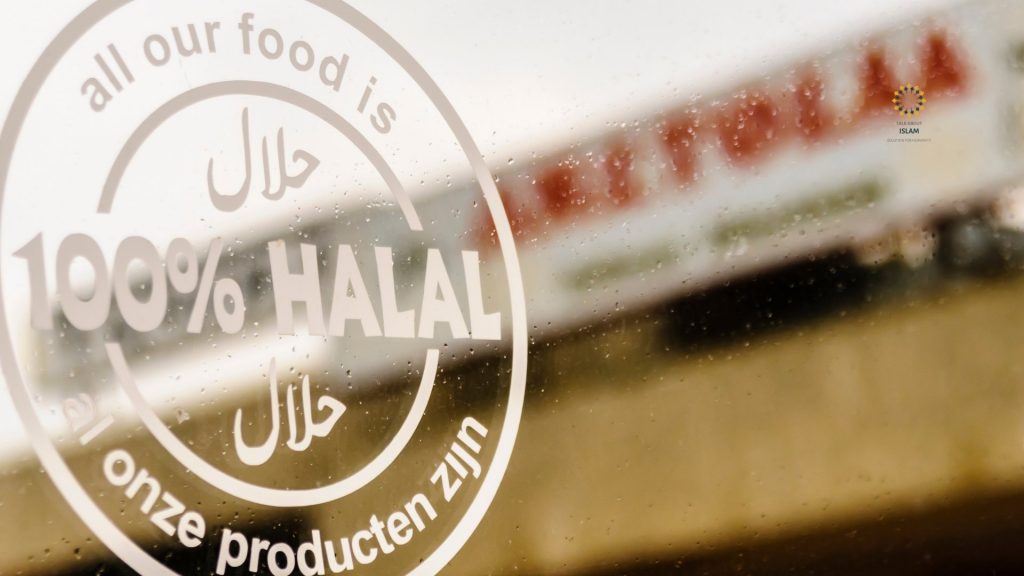
Many people today experience Islam primarily as a list of restrictions. Conversations about faith often revolve around what is allowed and what is forbidden. From food, clothing, and music to lifestyle choices, everything dominates the discussion. However, deeper moral questions are pushed aside. Over time, this narrow framing gives the impression that Islam exists mainly to regulate behavior rather than to shape character.
This leads to a genuine question: Is Islam itself obsessed so intensively with halal and haram, or has it been reduced to that by the way people present it?
To answer this crucial question honestly, we must return to Islam’s own sources, not its loudest voices or most visible expressions.
Where This Perception Comes From
In many communities, Islam is taught as compliance before understanding. Children often memorize rules long before they are taught the wisdom behind them. As a result, religion becomes associated with restriction rather than meaning, and obedience is disconnected from purpose.
Social media has intensified this problem. Online religious identity is often expressed through condemnation rather than reflection. Declaring something “haram” is rewarded with attention, while explaining why Islam prioritizes ethics, intention, and responsibility requires patience and nuance.
This is not a modern problem alone. The Qur’an itself criticizes communities that reduce faith to outward conformity while neglecting its spirit.
Allah warns against empty religiosity when He says:
“Righteousness is not that you turn your faces toward the east or the west, but righteousness is belief in Allah… and giving wealth… and establishing prayer… and fulfilling promises… and being patient in hardship.” (Quran 2:177)
This verse deliberately shifts attention away from external actions and toward belief, ethics, and responsibility. From the very beginning, Islam defines righteousness as moral substance, not ritual obsession.
What the Qur’an Emphasizes Most
When the Qur’an is read holistically, a clear pattern emerges. Its dominant concerns are not prohibition, but moral consciousness. Repeated emphasis is placed on justice, mercy, honesty, patience, accountability, and compassion toward others. These qualities form the backbone of faith.
Prohibitions exist, but they are secondary, not central.
Allah states this principle clearly:
“Allah intends for you ease and does not intend for you hardship.” (Qur’an 2:185)
This verse is not about a single ritual, but it expresses a broader philosophy. Ease is the intention, while boundaries are the means. Islam does not aim to suffocate human life. Instead, it aims to discipline it with wisdom.
Halal and Haram: What They Really Represent
Halal and haram are often misunderstood as the core of Islam. In reality, they function as ethical guardrails, and not the road itself.
The Qur’an explains:
“He has explained to you what He has forbidden for you—except under necessity.” (Qur’an 6:119)
This statement is revealing. What is forbidden is specific, limited, and contextual. The default state of life in Islam is permissibility, not restriction. Pleasure, creativity, work, and enjoyment are not viewed with suspicion unless they lead to harm or injustice.
Islam does not define a believer by what they avoid alone, but by how they live within those boundaries.
Why Prohibitions Exist at All
Islam does not prohibit things for control, but it does so for protection.
Intoxicants are forbidden because they cloud judgment and fracture families. Exploitation is forbidden because it violates human dignity. Dishonesty is forbidden because it erodes trust, the foundation of any healthy society.
The Qur’an explains this moral reasoning succinctly:
“They ask you about intoxicants and gambling. Say: in them is great harm and some benefit for people, but their harm is greater than their benefit.” (Qur’an 2:219)
This verse is important because it does not deny benefit. It weighs consequences. Islam does not operate on impulse, but it operates on moral calculus. When harm outweighs benefit, restraint becomes an act of responsibility.
The Prophet (PBUH) and His Teaching Method
If Islam were obsessed with halal and haram, the Prophet Muhammad (pbuh) would have taught primarily through lists of forbidden actions. Instead, he focused on moral formation.
He said:
“I was sent only to perfect good character.” (Hadith)
This statement defines the mission of Islam itself. Law exists to support character, not to replace it.
He also emphasized:
“Make things easy and do not make them difficult.” (Hadith)
When people struggled, he corrected gently. When they erred repeatedly, he did not humiliate them. His concern was always hearts before habits, understanding before enforcement.
Islam’s True Measure: Character and Accountability
The Qur’an links faith directly to ethical depth:
“Indeed, the most noble of you in the sight of Allah is the most righteous among you.” (Qur’an 49:13)
Righteousness here is not defined by rule-counting, but by taqwā, which is a conscious awareness of God that shapes behavior, intentions, and choices.
The Prophet (PBUH) emphasized that good character is among the heaviest deeds on the Day of Judgment. This alone shows where Islam places its weight.
So, Islam was never meant to be a checklist. It was meant to be a way of becoming better human beings.